

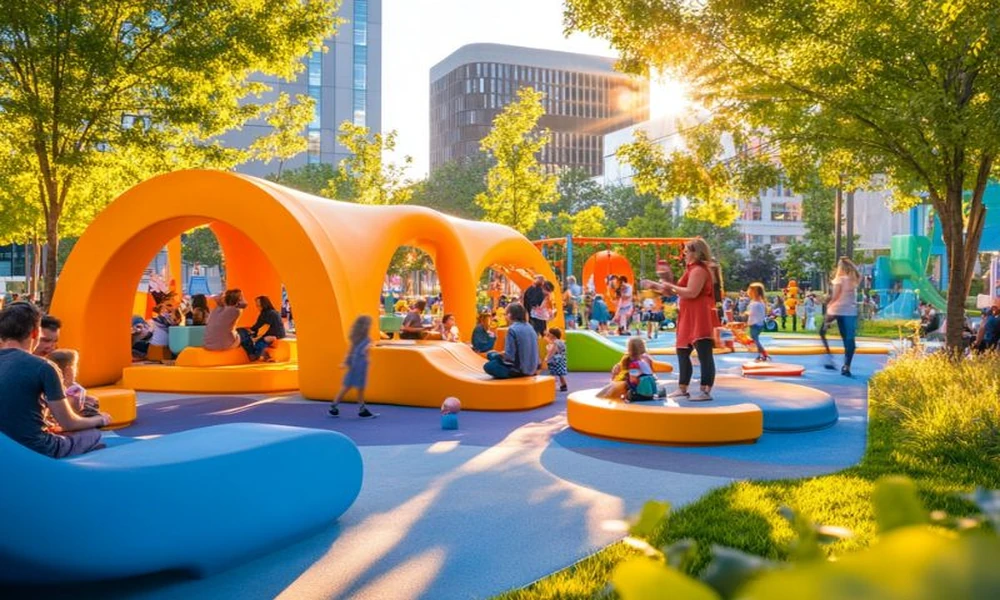
Chalk lines on asphalt and rigid steel jungle gyms once defined urban playgrounds, offering little more than a place for children to let off steam. Today, outdoor play spaces weave together nature, technology, and inclusivity in ways unimaginable a generation ago. With cities growing denser and green space scarcer, playground design has transformed, fueled by both necessity and innovation.
Early Concepts of Outdoor Play Spaces in Urban Areas
Origins and Traditional Designs
In the early 20th century, urban playgrounds emerged as a response to industrialization. Tucked between buildings or in vacant lots, these spaces typically featured metal slides, swings, and see-saws, functional but sterile. The message was clear: provide somewhere safe, but expect little inspiration.
Limitations of Early Urban Playgrounds
This approach neglected the diverse needs and imaginations of children. Accessibility was rarely a priority, and the sameness of design failed to reflect the cultural or ecological uniqueness of each neighborhood. In tight city quarters, these playgrounds sometimes even reinforced social divisions, as access was limited for many families.
Incorporation of Safety and Accessibility Standards
Evolution of Safety Regulations
The more children played, the more cities recognized the risks. Safety regulations soon set standards on surfacing, equipment height, and maintenance. Rubberized mats replaced hard ground, and low-risk, age-appropriate structures became the norm.
Impact of AODA and Other Accessibility Laws
Legislation like the Accessibility for Ontarians with Disabilities Act (AODA) redefined what inclusion meant in public spaces. No longer could playgrounds be designed for only the able-bodied. Ramps, tactile panels, and sensory zones are now commonplace in modern builds, ensuring children with mobility, visual, or cognitive differences aren’t left on the sidelines.
Designing Inclusive Play Spaces for All Children
The shift towards inclusive design means play spaces now cater to a broader spectrum of needs and abilities. Features like wheelchair-accessible swings and quiet zones foster social interaction while respecting individual boundaries. Inspire Play commercial playgrounds exemplify this trend, offering customizable options that meet accessibility standards without sacrificing creativity.
Emergence of Nature-Inspired and Eco-Friendly Playgrounds
Use of Natural Materials and Green Elements
Plastic and steel aren’t the only options anymore. Designers increasingly incorporate wood, boulders, sand, and living plants, blurring the line between the built and natural environment. Some playgrounds even use rain gardens or green roofs, restoring a patch of ecology to the urban grid.
Benefits for Child Development and Urban Ecology
Natural elements invite open-ended play and risk-taking, which are vital for creative problem-solving and social development. They also support urban biodiversity, provide shade, and moderate heat, benefits that become increasingly valuable as cities confront climate change.
Integration of Technology and Interactive Features
Smart Play Equipment and Digital Enhancements
Technology has begun to augment physical play rather than replace it. Interactive panels, motion sensors, and solar-powered sound installations create dynamic, responsive environments that boost engagement. Some play spaces now feature QR codes or mobile apps that activate stories or games, bridging the gap between digital and physical exploration.
Balancing Screen Time with Physical Activity
The key is harmony, not replacement. Effective playgrounds use tech to encourage movement and curiosity while avoiding passive screen-based entertainment. Rather than isolating kids, these digital features foster teamwork, learning, and healthy competition.
Community-Centered and Multi-Functional Play Areas
Collaborative Design Processes with Residents
Cities now realize that great playgrounds arise from community input. Co-design workshops invite children, parents, and local organizations to share ideas and dreams, ensuring the end result reflects a neighborhood’s culture and needs.
Combining Play, Recreation, and Social Spaces
Modern play areas aren’t just for kids. Seating, shade pavilions, and fitness equipment for adults transform playgrounds into gathering places that encourage intergenerational connection and community pride.
Adaptive and Modular Playgrounds for Growing Cities
Flexible Equipment for Diverse Age Groups
With limited space, one-size-fits-all no longer works. Modular components, movable climbing walls, stackable blocks, or adjustable-height elements, adapt as children grow, making the most of every square foot.
Addressing Space Constraints in Dense Urban Settings
Compact urban lots inspire inventive solutions. Vertical play structures, rooftop playgrounds, and pop-up parks maximize utility without sacrificing fun. These adaptive installations can be reconfigured as neighborhoods evolve.
Future Trends Shaping Outdoor Play Spaces
Sustainability and Climate-Responsive Designs
Cities increasingly demand materials and systems that withstand harsh weather while minimizing environmental impact. Permeable surfaces, recycled materials, and native plantings set the standard for climate-resilient playgrounds.
Emerging Innovations: Augmented Reality, Sensor-Based Play
Emerging technologies such as augmented reality and sensor-based games are on the horizon, promising even more immersive and personalized play experiences. Imagine children collaborating to solve puzzles projected onto real-world surfaces, or play equipment that responds dynamically to group activity.
Policy and Funding Shifts Supporting Play Space Evolution
Governments and private partners are rethinking budgets and priorities, directing funding toward green, inclusive, and technology-rich play infrastructure. As urban life grows more complex, outdoor play spaces are recognized not just as amenities, but as essential foundations for healthy, connected communities.
Across cityscapes, the best playgrounds today are those that adapt, inspire, and include. What started as a simple place to climb and slide has become a canvas for innovation, shaping not just the way children play, but how urban neighborhoods thrive.
