

Four percent. That’s the difference between a legal windshield strip and a fix-it ticket in Michigan, and most drivers never hear the number until they’re pulled over.
Here’s the short version: Michigan is stricter than most states on the front glass and more forgiving on the back. Your windshield can carry a nonreflective strip along the very top, and that strip cannot dip more than 4 inches from the top edge or extend below the AS-1 line, whichever comes first. Your front side windows have to let in at least 50 percent of visible light. Everything behind the driver’s seat is wide open, with no percentage requirement at all.
Those rules are published in state statute, and your installer has to follow them whether or not you ask. If you’re shopping around for auto accessories in Kalamazoo, MI, ask the shop to quote against the statute, not against what looks good on a display board.
What the 50 Percent Rule Actually Means on Your Car
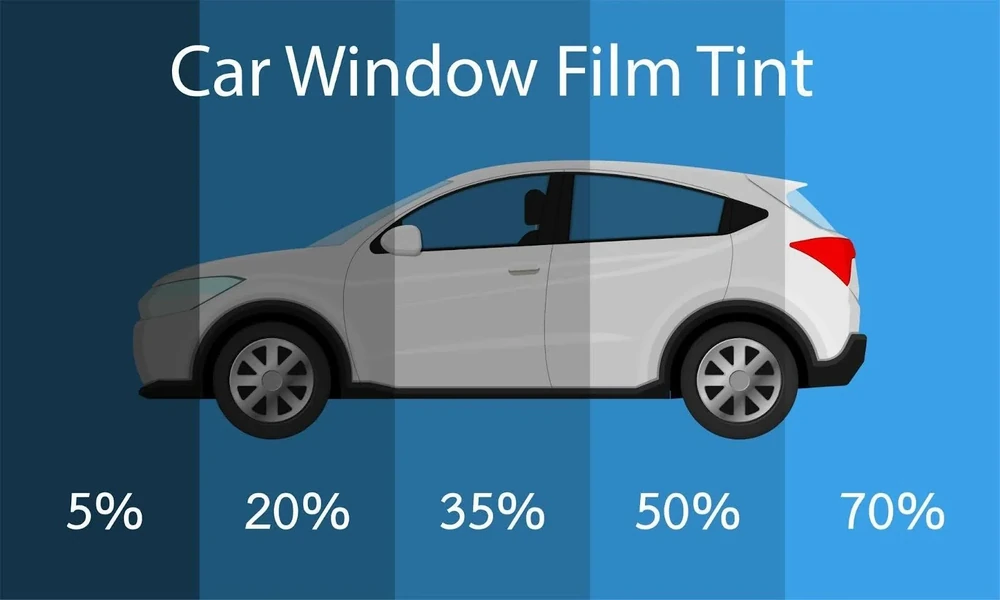
Visible light transmission, or VLT, is the share of daylight that passes through the film. A 50 percent film lets half the light in, which is roughly the factory look on a lot of new cars already. This is where drivers get tripped up. Glass itself blocks a little light, so a 50 percent film over factory glass often lands just under the legal line once it’s measured with a meter.
That’s why experienced shops push you toward a 55 or 60 percent film on the front doors if you want zero risk. It reads almost factory in daylight and keeps you clearly inside the rule.
The state’s rules live in the Michigan Vehicle Code, and the State of Michigan publishes the full statute for anyone who wants to read the source text. It’s dry reading. It’s also the only version that matters if a police officer is standing at your window with a light meter.
The Rear Windows: Where Michigan Loosens Up
Back seat windows and the rear glass have no VLT requirement in Michigan. You can go as dark as you like, which is why limo tint on a family hauler is legal in the back and illegal up front.
Two exceptions worth knowing. First, if you tint the rear glass, most installers will tell you the view out gets dimmer at night, and that’s a comfort issue rather than a legal one.
Second, some vehicles have a factory-installed privacy glass that already reads dark on a meter, and adding film can push it into territory that raises questions during a stop even where the law is silent on percentage.
My take: go dark in back if you haul kids or gear, keep the front doors at 55 percent. You get the heat relief where the sun actually hits passengers without giving an officer a reason to start a conversation.
Do You Need a Medical Exemption?
Michigan does allow a medical exemption for drivers who need extra sun protection, and it requires paperwork from a physician submitted through the state, not a note handed to your installer. If that applies to you, handle the approval first. Film goes on after, and you keep the documentation in the glovebox.
Ceramic film deserves a mention here too. It rejects heat through a different mechanism than dye or metal films, so you can get real comfort at a lighter shade instead of maxing out the darkness. If your goal is a cooler cabin rather than a blacked-out look, ceramic at 55 percent beats cheap film at 20.
A Simple Pre-Booking Check You Can Run in Ten Minutes
I’ve watched enough people pay for a strip and then pay again to have it removed. Run this sequence before you hand over a card.
- Read your own glass first. Walk around the car and look for a small etch mark on each window. Many manufacturers stamp the glass type there, and it tells you whether you already have privacy glass in back.
- Pick your film by position, not by vibe. Front doors at 55 percent or lighter, rear doors and back glass whatever you want, top strip within the 4 inch limit.
- Ask the shop for their meter reading. A good installer will put a meter on a scrap of film over a sample of your glass and show you the number before cutting anything.
- Get the legal limits in writing on the quote. If a shop shrugs at the question, that’s your signal to walk.
- Keep your receipt and film warranty card in the car. It won’t clear a citation, but it settles questions about when and where the work was done.
The Insurance Institute for Highway Safety has documented how much ultraviolet radiation comes through side glass compared with a windshield, and that’s the strongest argument for film on the front doors even at a light shade. You’re not tinting for looks at that point. You’re tinting because the side glass is the part of the car your arm rests against for an hour a day.
The Heat Problem Tint Actually Solves
Park a dark-interior car in a Michigan July lot for two hours and the steering wheel becomes a liability. Ceramic film cuts the infrared load that makes that happen, and the difference between an untinted cabin and a ceramic-tinted one is obvious within the first minute of sitting down.
Here’s the part people miss: the sun angle matters more than the outside temperature. The National Weather Service tracks UV index as a separate measure from heat for exactly this reason. A 78 degree afternoon in late spring can carry a higher UV index than a 90 degree day in August, and your skin and your dashboard don’t care what the thermometer says.
That’s also why I’d spend money on ceramic for the front doors before I’d spend it on dark film for the back. The front is where the driver sits. The back is where the grocery bags sit.
What to Ask Before You Sign
Five questions separate a shop that knows the rules from one that’s guessing.
- What meter reading will my front doors show after install, on my actual glass?
- What brand and series of film are you using, and what’s the warranty term on color stability?
- Do you handle removal of existing film, and is that priced separately?
- How long before I can roll my windows down?
- Do you have the state limits printed on your quote sheet?
The last one matters more than it sounds. A shop that keeps the statute at the counter has already answered the question you’d otherwise have to research at 11 p.m.
And if you’re comparing window film against other upgrades like a backup camera or a remote starter, be honest with yourself about which one you’ll notice every single day. Tint wins that argument in July. A remote starter wins it in January. Both are worth the money, just not in the same month.
Bottom Line Before You Book
Front side windows at 50 percent or lighter, windshield strip capped at 4 inches or the AS-1 line, back glass unrestricted. That’s the whole rulebook, and it fits on a sticky note.
Pick your film by position, get the meter reading in writing, and choose ceramic over dark if comfort is the real goal. The look follows the function more often than people expect.
What’s the actual meter reading on your front doors right now? If you don’t know, that’s the first thing to find out.
