

Choosing a floor coating for a commercial building involves more than selecting the strongest product on the market. A warehouse, medical clinic, retail store, and manufacturing plant all place different demands on their concrete floors, so the right coating depends on how the space is used every day. Understanding which floor types benefit most from epoxy or polyurea helps property owners make a practical decision instead of relying on general recommendations. This article explains where each coating performs best and what should be considered before installation.
Warehouse and Distribution Center Floors
Warehouse floors experience constant forklift traffic, pallet movement, and heavy inventory loads that gradually wear down unprotected concrete. Durable commercial epoxy and polyurea flooring helps reduce surface abrasion, impact damage, and concrete dust while making routine cleaning easier. Epoxy is commonly chosen for warehouses that prioritize long-term durability and abrasion resistance, while polyurea is often preferred when operations require a much faster return to service after installation. The right choice depends on production schedules as much as daily traffic.
Common Challenges
- Forklift and pallet jack traffic
- Surface abrasion and concrete dust
- Tire marks and dropped loads
- Frequent sweeping and cleaning
Manufacturing and Industrial Facility Floors
Manufacturing facilities expose floors to machinery, oils, chemicals, and repeated impact throughout the workday. Epoxy is frequently selected where chemical resistance and a hard protective finish are priorities, making it suitable for production areas with regular exposure to oils or industrial chemicals. Polyurea is better suited to facilities that need shorter installation downtime or greater flexibility under changing temperatures because it cures much faster than traditional epoxy systems. Matching the coating to production requirements helps improve long-term floor performance while minimizing disruptions to daily operations.
Retail, Showroom, and Commercial Office Floors
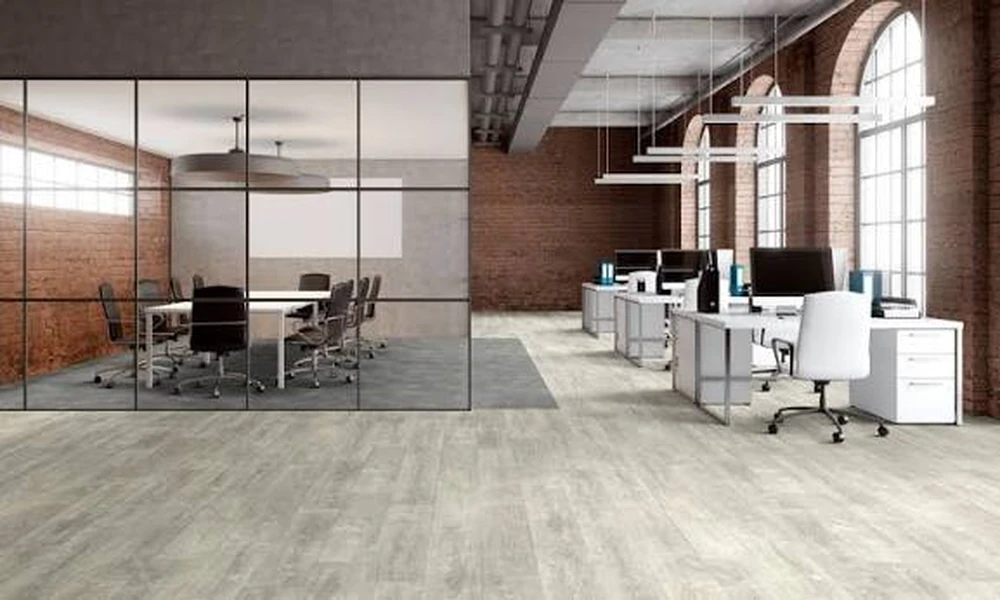
Retail stores, showrooms, and office buildings require floors that create a professional appearance while handling steady foot traffic. Decorative finishes, stain resistance, and easy maintenance usually influence coating selection as much as durability. Epoxy is a popular option because it offers a smooth, attractive finish in a wide range of colors, while polyurea works well for renovation projects where businesses want to reopen as quickly as possible. The best choice balances appearance, maintenance needs, and business schedules.
Healthcare, Educational, and Food Service Floors
Hospitals, schools, cafeterias, and commercial kitchens require flooring that supports cleanliness and daily sanitation. Seamless coated surfaces reduce places where dirt and moisture can collect, making routine cleaning more efficient. Floors with optional slip-resistant finishes can also help improve traction in areas exposed to moisture or frequent foot traffic. Polyurea is commonly selected when facilities need rapid installation to reduce disruption, while epoxy remains a strong choice for areas that benefit from a durable, seamless surface capable of handling frequent cleaning. The best choice depends on cleaning requirements, expected foot traffic, and the facility’s installation schedule.
Concrete Condition Before Coating Installation
Even the best coating cannot perform as expected if the underlying concrete is not properly prepared. Experienced installers inspect the slab before recommending durable commercial epoxy and polyurea flooring because cracks, moisture vapor, previous sealers, and surface contamination all affect long-term adhesion and performance.
Before installation, professionals typically evaluate:
This assessment helps determine whether epoxy or polyurea is the better fit while reducing the likelihood of premature coating failure.
Selecting between epoxy and polyurea becomes much easier when the floor’s daily demands guide the decision. Warehouses, manufacturing facilities, retail spaces, healthcare buildings, and educational environments all benefit from different coating characteristics based on traffic, cleaning requirements, and operating schedules. Learning more about commercial concrete coating services helps property owners choose a flooring system that supports long-term durability, easier maintenance, and reliable performance for their specific facility.
