

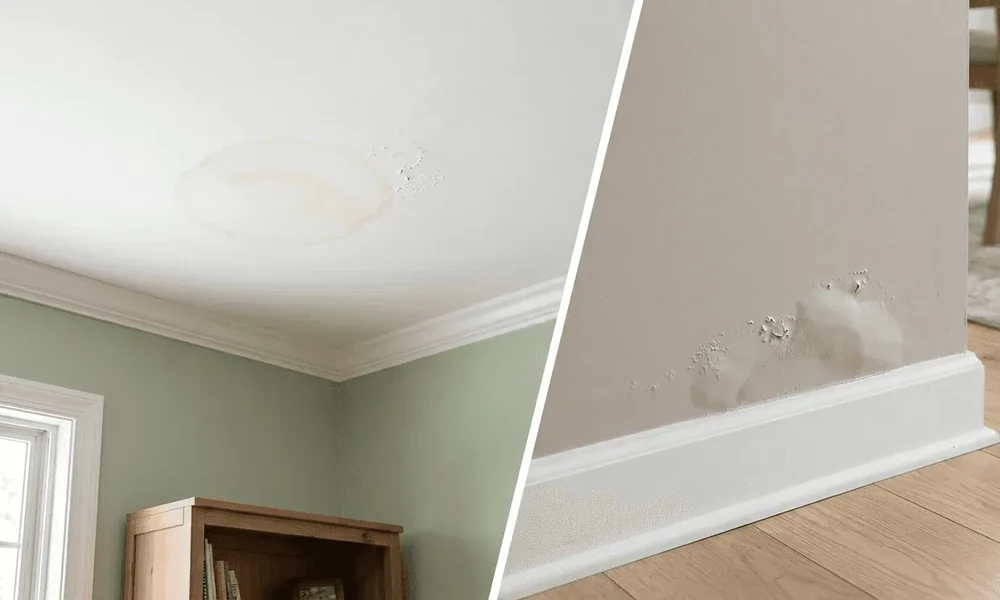
Your pipes were quietly failing for six months before you noticed the stain on the ceiling. That’s the cruel thing about plumbing problems: by the time they become obvious, the damage is already expensive. Most homeowners can spot a burst pipe. Almost none can catch the slow, invisible issues that quietly wreck walls, floors, and budgets over weeks or months.
This guide covers the five warning signs that get missed most often, a practical diagnostic method you can run yourself, and a clear breakdown of when a problem needs professional eyes on it fast.
Why Hidden Plumbing Problems Are So Common
Residential plumbing is almost entirely out of sight by design. Pipes run behind drywall, beneath concrete slabs, under floorboards, and deep underground in your yard. You interact with the endpoints every day, but the system itself stays invisible until something goes wrong.
That invisibility is why slow leaks, corroding joints, and partial blockages can develop for months without producing a single dramatic symptom. Small leaks, corrosion, slow drainage, pipe movement, or sewer line damage can develop quietly for months or even years before a homeowner notices. And when early symptoms do appear, they tend to look like unrelated house quirks: a musty smell, a soft spot on the floor, slightly lower water pressure in the shower.
The pattern matters as much as the individual symptom. One slow drain might be a hair clog. Three slow drains at the same time almost certainly mean something deeper.
Sign 1: Your Water Bill Crept Up Without Any Explanation
This is the most commonly missed signal because people assume higher bills come from behavioral changes. Maybe you had a guest stay over. Maybe it was a hot summer. Both are reasonable guesses, and they let homeowners talk themselves out of investigating further.
But a gradual, unexplained increase in your monthly water bill is the most reliable early indicator of a concealed leak. According to the U.S. EPA’s WaterSense program, the average household’s leaks can account for nearly 10,000 gallons of water wasted every year and could be adding as much as 10% to your water bill. That’s a real dollar hit every single month, for a problem you can’t see from the kitchen table.
Pull the last four months of bills and lay them side by side. A consistent upward trend with no change in your household’s habits is a red flag worth acting on.
Sign 2: A Persistent Musty Smell That Cleaning Doesn’t Fix
Mold needs three things to grow: a food source, warmth, and moisture. Your walls already have the first two covered. All it takes is a slow drip behind the drywall to give it the third.
A persistent musty smell is one of the strongest indicators of hidden moisture. Even if you can’t see water damage, mold and mildew may already be growing behind walls or under flooring. The tricky part is that the smell often comes and goes. You notice it after a shower, or when you open a cabinet under the sink, then it fades. That intermittent quality is exactly why it gets dismissed.
If a smell keeps coming back despite cleaning, trace it to the room’s plumbing fixtures. Under-sink cabinets, bathroom walls shared with a shower, and the area around the toilet base are the most common locations for slow, hidden leaks producing that kind of odor.
Sign 3: Water Pressure That Quietly Dropped
Gradual pressure loss is easy to rationalize. You tell yourself the municipal supply is just having a rough day. Then two weeks later, you notice the shower is weaker than you remember, and you shrug again. This process can repeat for months.
A sudden drop in water pressure can indicate a leak somewhere in your plumbing system. If only one fixture is affected, the issue may be localized. If multiple fixtures are affected, the problem is likely deeper in your plumbing system.
Whole-house pressure loss that develops slowly over weeks points toward pipe corrosion, a developing leak in a main supply line, or mineral buildup narrowing your pipes from the inside. None of those fix themselves, and all of them get worse without intervention.
Sign 4: Sounds of Running Water When Nothing Is On
This one is unnerving when you notice it, but it’s easy to ignore because it often happens at night. You’re lying in bed, and you hear something that sounds like water moving through a pipe. You assume it’s just the house settling, or a neighbor’s plumbing in an adjacent unit, and you go back to sleep.
If you hear water running when no taps, appliances, or toilets are in use, it’s a strong warning sign. Even small leaks can produce audible sounds when water escapes under pressure. Many homeowners notice this at night when the house is quiet.
A simple meter test confirms whether you have a real leak. Turn off every water-using appliance and faucet in the house, then read your water meter. Wait two hours without using any water. Check it again. If the dial moved, something is leaking. This test costs nothing and takes three minutes of actual effort.
Sign 5: Soft Spots, Warped Floors, or Peeling Paint
Structural changes to your home’s surfaces are among the clearest physical evidence of ongoing moisture intrusion. A soft spot in the floor near a toilet is almost never the floor’s fault. Bubbling or peeling paint on a wall adjacent to a shower is almost never just old paint.
Homeowners should also watch for signs that appear outside the plumbing system. Pest activity can increase around hidden moisture. Doors or trim can swell near a concealed leak. Flooring may cup, loosen, or feel soft. By the time you can feel softness underfoot, there’s been enough sustained moisture to begin compromising structural materials. That’s past the “we’ll watch it” stage.
Consider what happens to a typical family who notices a tile coming loose near the bathroom vanity. They regrout it. Six months later, the cabinet base starts to rot. When a plumber finally investigates, there’s a slow drip from a supply line connection that’s been feeding water into the subfloor for most of the year. The plumbing fix is a two-hour job. The floor repair is several thousand dollars. Early detection would have meant the former and skipped the latter entirely.
The DRIP Diagnostic: A 10-Minute Home Check
This is a straightforward four-step check you can run yourself on a Saturday morning. It won’t catch everything a professional inspection will, but it’s a solid first screen for active problems.
- D – Document your water bill. Pull three months of statements and mark any increase above five percent with no behavior change to explain it.
- R – Read your water meter. Turn off all water use, write the meter reading, wait two hours, read it again. Any change signals a leak.
- I – Inspect under sinks and around toilet bases. Feel for moisture, look for staining, check for soft cabinet floors. Do this in every bathroom and the kitchen.
- P – Pressure-test your fixtures. Run a single faucet and note the pressure. Do this in multiple rooms. Significant variation between rooms points to a supply line problem worth investigating.
If you hit a flag on any one of these steps, don’t wait. A small leak behind a wall, a partially blocked drain, or a deteriorating pipe can eventually cause water damage, higher utility bills, and expensive repairs. Home water damage affects 14,000 people every day across the United States , and the vast majority of those situations started as something a homeowner noticed but decided to monitor rather than fix.
Professional plumbers assess indirect evidence like humidity changes, odors, and temperature differences that even attentive homeowners tend to miss entirely during a casual walk-through of their home.
That gap between what you can see and what a trained eye can detect is exactly why catching problems early and calling in a professional at the right moment matters so much. For OKC homeowners dealing with any of the warning signs above, working with affordable plumbers in Oklahoma City means getting a professional assessment before a minor issue compounds into a five-figure repair.
When to Stop Monitoring and Start Calling
Some situations warrant a call the same day you notice them. Here’s a quick decision guide:
| Warning Sign | Self-Monitor or Call Now? |
|---|---|
| Water bill up less than 5%, no other signs | Monitor for one more billing cycle |
| Water bill up, plus musty smell or soft floor | Call now |
| Meter moves during two-hour test | Call now |
| Pressure loss in one fixture only | Check aerator first, then call if unchanged |
| Pressure loss in multiple rooms | Call now |
| Running water sounds at night | Run meter test; call if meter moved |
| Soft flooring, swelling trim, peeling wall paint | Call now |
The instinct to wait and see makes sense when you’re looking at a small stain or a slightly higher bill. But plumbing problems earn compound interest on delay. A $200 pipe repair left alone for four months can turn into a mold remediation and subfloor replacement. Your home is talking to you through these symptoms. The only question is whether you act on what it’s saying.
